
I’m used to thinking that women, especially Black women, when united, can be undefeatable. When the reality you come from is not the most promising for some, you must work hard to succeed and make your dreams come true.
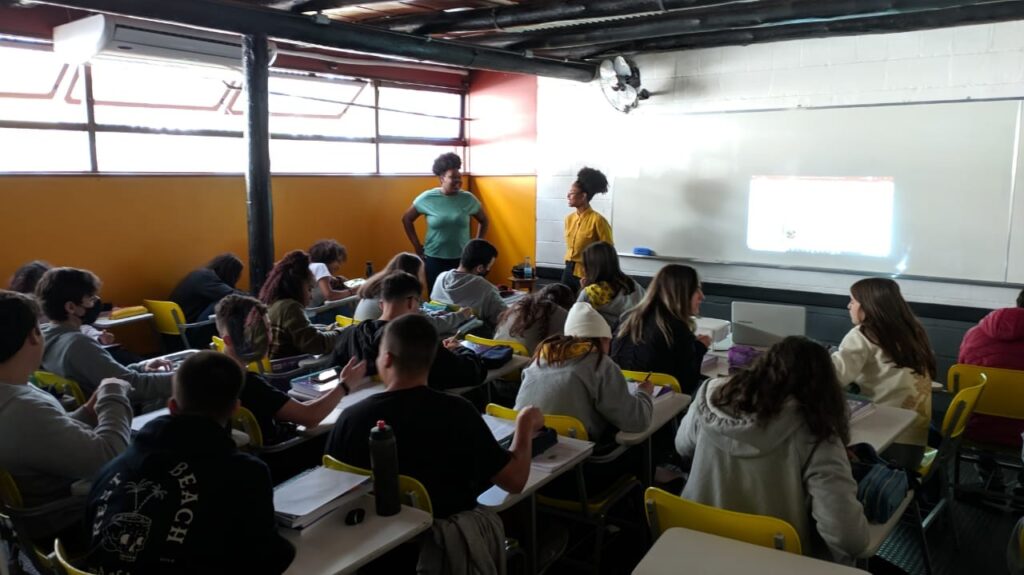
This belief becomes even more accurate when we look at the social inequality present in Brazilian society. Brazil is considered one of the most unequal countries in the world, with inequality increasing over the past decade, according to research conducted by the World Inequality Lab in 2025. Following the same line of thought, Brazil is one of the most unequal countries in terms of opportunities, and as a result of that, the number of Brazilians who continue their education has decreased. Therefore, the economic situation influences educational performance.
Since 2008, the teaching of Afro-Brazilian and Indigenous History is mandatory in Brazil (Law 10.629/03), nevertheless, both private and public educational institutions do not fully follow this rule. Consequently, many black kids end up not studying their own history. This affects self-esteem, identity, and empowerment.
In 2015, a group of young women from my hometown, Nova Friburgo (Rio de Janeiro), decided to provide black people with knowledge about their culture. Imperio das Negas Black Girls Empire arose as a social and cultural project with the purpose of spreading Afro-Brazilian culture and history in the region. Maiara Felício, Michelly Felício, Jheniffer Andrade, Leticia Santos, and Marielle Vieira created the project as a way of showing black people that they were seen and influential.
The other day I was watching the movie “Harriet” (2019), and it made me think about how African American history relates to Afro-Brazilian history. Harriet Tubman was an African American woman who fought for freedom during slavery. Harriet was born enslaved but won her freedom when she escaped a plantation in Dorchester County, Maryland. After reaching Pennsylvania with the help of the Underground Railroad and its network, Harriet Tubman decided to come back and free other people. Liberation came through action. Tubman was a strong woman who did not give up on freeing her people. With that being said, Harriet Tubman’s role can be compared with the work of these young women who gave Afro-Brazilians the opportunity to learn more about themselves, their culture, and their sense of belonging in Brazilian society. Liberation this time came through education and culture. What Imperio das Negas does is empower, give opportunities, and promote acceptance. Since Brazilian education is not very successful in telling the real history of their founders (Africans and Indigenous peoples), the project does it as a way of reducing the social inequalities existing in the country, as well as to empower black people.
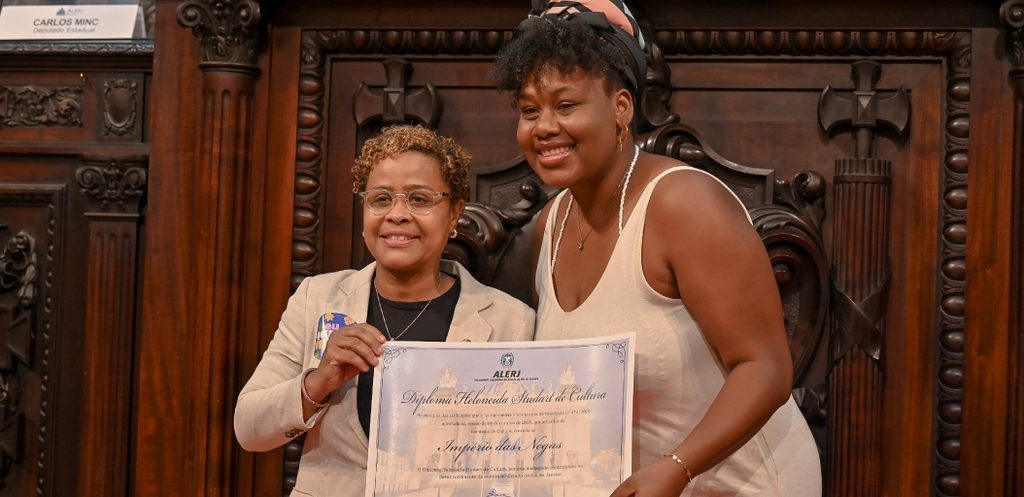
In 2024, the social and cultural project Imperio das Negas received the Heloneida Stuart diploma from the Legislative Assembly of Rio de Janeiro (ALERJ) for its role in spreading and defending culture, education, and human rights.
Education is a means of freeing people from the social injustices they are subjected to, as Paulo Freire argued.
Education is a political act. Liberation came through action.
References:
Instagram: @imperiodasnegas_
AMARAL, Erika. WANDROFSKI, Alice. Alerj homenageia cinco entidades culturais de Nova Friburgo com Diploma Heloneida Studart. Portal Multiplix, 2024. Retrieved August 2026. From https://www.portalmultiplix.com/noticias/cultura/alerj-homenageia-cinco-entidades-culturais-de-nova-friburgo-com-diploma-heloneida-studart