
Growing up in Brazil, racism wasn’t a topic I would think of discussing. During my bachelor’s and after years working in private schools, I could understand the severity of the problem. Looking back, I understand why I didn’t think about discussing it. Racism was normalized around me.
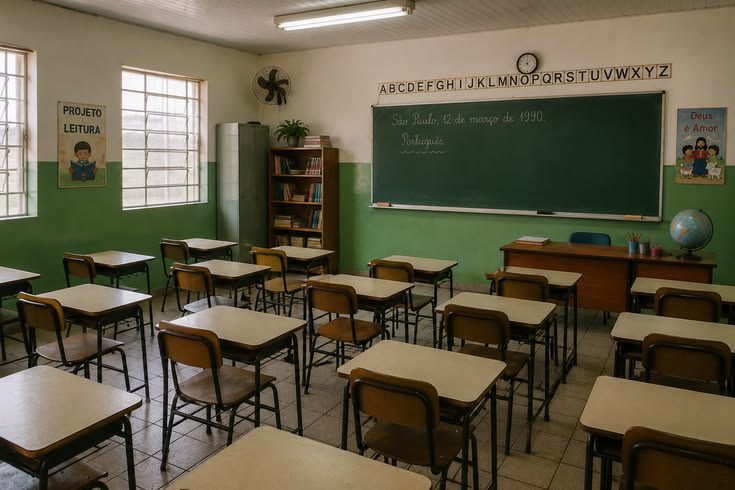
According to the UOL Education survey held in 2021, less than 10% of all the students of the 20 best private elite schools of Brazil are black. This data not only shows the economic disparity in the country, but also the structural racism within Brazilian society.
I was reading the book “Como Ser um Educador Antirracista” How to Be an Antiracist Educator by Bárbara Carine, and it gave me some thoughts on this issue. It is paradoxal that a country with the largest number of Black people outside the continent of Africa still faces this great social issue. A well-discussed aspect of this matter is transforming the school to not only identify racism or racial problems, but in addition to it, that the victims are comforted and that schools act against it. Racism is a social construct, which means it can be addressed and resolved socially, and education’s role is beyond essential.
There is plenty of evidence of how deeply embedded white privilege is in Brazilian society. White people can see themselves, even poor white people, in power roles such as doctors, engineers, politicians, cinema and TV, and others. White people are usually at the top of the social pyramid. While for Black people, not only the economic aspect matters, but also the social views of themselves in power roles as well as their actual presence in these roles.
The problem by itself is painful, which makes education’s role extremely crucial. Education professionals must acknowledge the existence of racial oppression, as well as that these people are well prepared to deal with the micro- or macro-situations that may happen in the classroom and the school areas.
Bárbara Carine, in her book, points out some directions we can take to make this problem a past problem. According to Carine, children are shaped by a positive perspective of themselves, so it is the school’s role to reinforce positive perspectives and empower facts about their ancestry and historical roots. For instance, introduce them to Black people in roles of power – not only in media but also within the school community, such as principals and coordinators. Furthermore, schools need to work on effective instructional changes such as shifting teaching methods, creating diverse libraries, and investing in professional qualifications, and in addition to that, it is essential that teachers and professors understand the need for a democratic education – all people are important for the formation of society, not only a specific group. Thus, the curriculum must be flexible and democratic.
Living in the United States and experiencing the American culture have opened my eyes to a different – not perfect – world of opportunities and representation. Even though there’s still a lot to be done, I have had the opportunity to see libraries filled with books written by Black authors and/or with Black characters; books that talk about Black empowerment, justice, and self-love; I have had the opportunity to engage and learn from Black school collaborators; I have seen Black figures in roles of power. In a certain way, I can see myself in those people, or at least this is how I would like to see my people back home.
There’s an African proverb which says “A child’s development and well-being are the responsability of the entire community, not just the parents”. Hence, for which dream do you teach?
References:
NICOLAU, Andre. Entenda como a educação antirracista transforma o ensino em sala de aula. CNN Brasil, 2025. Retrieved July, 28, 2026. From https://www.cnnbrasil.com.br/educacao/entenda-como-a-educacao-antirracista-transforma-o-ensino-em-sala-de-aula/
PINHEIRO, Bárbara Carine Soares. Como ser um educador antirracista: para familiares e professores. São Paulo: Planeta, 2023
BORGES, Waleska. Negros são menos de 10% dos alunos nas 20 top escolas privadas do Brasil. UOL, 2021. Retrived July, 27, 2026. From https://educacao.uol.com.br/noticias/2021/05/23/negros-sao-menos-de-10-dos-alunos-das-20-top-escolas-privadas-do-brasil.htm
You brought up a very interesting point. Even being considered a white person (only in latin countries) I can see this stark difference when comparing the reality of black people in Brazil to the reality of black people in US. The progress that the United States has made regarding this is clearly visible. Black people are occupying spaces, especially in education, that we do not see happening with any frequency in Brazil
This is such an important and thought-provoking reflection on the role of education in addressing racism. I especially appreciate the connection between representation, self esteem, and children’s development. Schools have a powerful responsibility not only to teach about racism but also to create environments where every child can see themselves represented, valued, and empowered. I also really liked the African proverb at the end, it reminds us that educating children is a collective responsibility. Thank you for sharing such an insightful perspective!